Bedfordshire Post Codes & Zip Codes List
MAPS & LOCATION
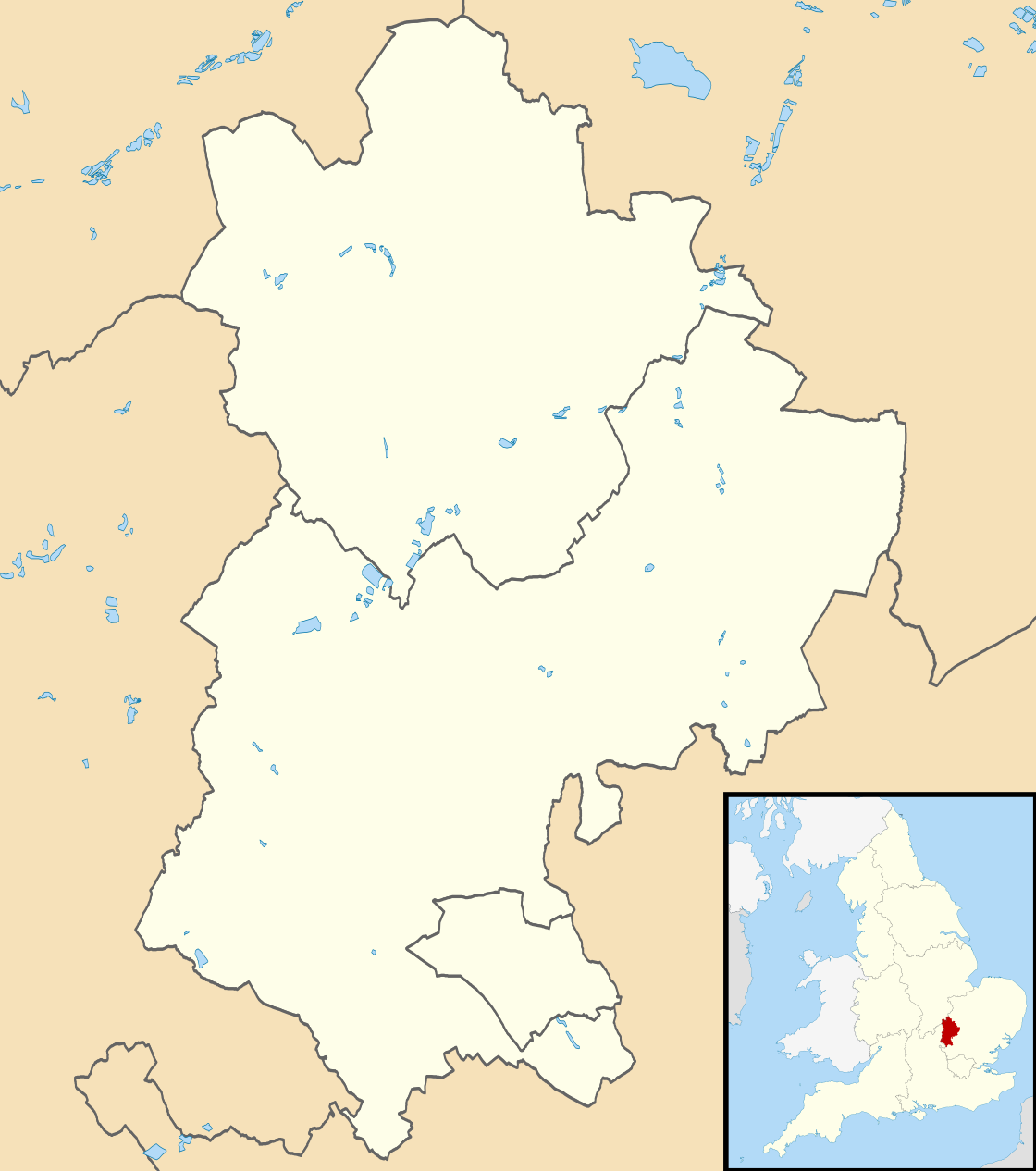
Bedfordshire, England: A Complete County Guide
Introduction
Bedfordshire is a historic and ceremonial county in the East of England, renowned for its picturesque countryside, thriving market towns, rich heritage, and excellent transport connections. Covering approximately 1,235 square kilometres (477 square miles), the county lies between Northamptonshire, Cambridgeshire, Hertfordshire, Buckinghamshire, and a small section of Oxfordshire, placing it in a strategic position at the heart of southern England.
Although one of England's smaller counties by area, Bedfordshire has played an important role in British history, agriculture, industry, and commerce for centuries. Today, it is home to more than 700,000 residents and comprises three unitary authorities: Bedford Borough, Central Bedfordshire, and the Borough of Luton. Together, these areas offer a diverse mix of bustling urban centres, attractive market towns, historic villages, and tranquil rural landscapes.
Bedfordshire is perhaps best known for the county town of Bedford, the thriving town of Luton and its international airport, the market towns of Dunstable, Leighton Buzzard, Biggleswade, and Ampthill, and the rolling chalk hills of the Chilterns in the south. The county also enjoys excellent road and rail connections, making it a popular place to live for commuters working in London, Milton Keynes, Cambridge, and other nearby cities.
Combining centuries of history with a modern economy, highly regarded educational institutions, attractive countryside, and growing business opportunities, Bedfordshire continues to attract residents, visitors, students, and investors from across the United Kingdom and beyond.
Geography and Landscape
Bedfordshire occupies a varied landscape shaped by rivers, farmland, woodlands, and gently rolling hills. While much of the county consists of fertile agricultural land, its southern edge is defined by the beautiful Chiltern Hills, a designated National Landscape (formerly known as an Area of Outstanding Natural Beauty). These chalk hills provide spectacular scenery, ancient woodlands, walking trails, and important habitats for wildlife.
The River Great Ouse is the county's principal watercourse, flowing through Bedford before continuing east towards Cambridgeshire and eventually reaching The Wash. The River Lea rises near Luton before flowing south through Hertfordshire and Greater London.
Much of central Bedfordshire is characterised by productive farmland growing wheat, barley, oilseed rape, vegetables, and other crops. Hedgerows, small woodlands, lakes, and nature reserves create a varied rural landscape that supports numerous bird species and native wildlife.
Country parks, river valleys, and open green spaces provide residents and visitors with excellent opportunities for walking, cycling, fishing, birdwatching, horse riding, and other outdoor activities.
The county experiences a temperate maritime climate with mild winters, warm summers, and moderate rainfall throughout the year. Its location east of the Welsh mountains means Bedfordshire generally receives less rainfall than western parts of Britain.
Bedfordshire, can also be described as a physical and historical entity in the southeasterly Midlands of England, was once an administrative county. Central Bedfordshire and South Bedfordshire were merged with the city of Bedford to form a new unitary authority in 2009, after the administrative county was dissolved. As a component of Bedfordshire, the unitary county of Luton can be found.
Although its boundary differs in three places from the former administrative county, the historic county is otherwise highly consistent with the physical county in terms of area. Linslade, in central Bedfordshire, is a part of historic Buckinghamshire, while Sandy and the surrounding area are in Cambridgeshire. The town of Eaton Socon is in the Huntingdonshire district of the modern county of Cambridgeshire, but it was formerly a part of Bedfordshire.
Bedfordshire has been populated for a very long time. In the early Bronze Age, a group of people known as the Beaker migrated from the eastern Mediterranean to the Ouse valley (about 1800 BCE). During the Roman domination (1st-5th century CE), Dunstable (Roman Durocobrivae) served as a key route center in the county's southern region. Waves of invaders, especially the Anglo-Saxons and the Danes, flooded the country after the Romans abandoned it (who actually established Bedford).
The county's southern region is situated on the chalk ridge known as the Chiltern Hills. The Great Ouse and its tributaries drain the remaining area. Sandstones, clays, and limestone from the Jurassic and Cretaceous periods make up the majority of Bedfordshire's geology. The local clay in the Marston Vale has been used to create bricks in the Fletton style. Gravel, which is made of hard flint nodules eroded from chalk, was mined for profit from pits that are now lakes in Priory Country Park, Wyboston, and Felmersham. Near Leighton Buzzard and ending near Gamlingay, the Greensand Ridge is a prominent escarpment in Cambridgeshire.
Climate
Bedfordshire has a dry climate because of its position in the eastern portion of the country. The average annual rainfall in Bedford is 597.6 millimeters (23.53 inches). As the wettest month, October receives 62.5 mm (2.46 in) of precipitation, while the driest month, February, receives only 36.7 mm (1.42 in) (1.44 in). There isn't much of a seasonal difference, but spring and summer are when the heaviest rains and most frequent floods occur, and fall and winter have more wet days than spring and summer (such the ones that occurred on Easter in 1998).
Nighttime lows in Bedford average 0.3 degrees Celsius (33.4 degrees Fahrenheit) in February, while daytime highs average 22.1 degrees Celsius (71.8 degrees Fahrenheit) in July.
Historical Background
It was originally used in reference to Bedfordshire (1011) as "Bedanfordscir," a name derived from the locational name Beda's ford (river crossing).
Nine hundreds (Barford, Biggleswade, Clifton, Flitt, Manshead, Redbornestoke, Stodden, Willey, and Wixamtree) and the liberty and borough of Bedford made constituted the historic county of Bedfordshire.
The line between Hertfordshire and Bedfordshire changed in 1897, when Kensworth and a small section of Caddington were transferred to Bedfordshire.
The "Bedfordshire clanger," a suet-crust pastry stuffed with meat at one end and fruit preserve at the other, is a favorite local delicacy. The traditional field worker lunch served two purposes: to prevent any food from going to waste and to supply a sufficient amount of calories.
Named for the grainy chocolate filling that's designed to resemble the texture of toothpaste, Chocolate Toothpaste tarts are a sort of chocolate tart.
The history of Bedfordshire stretches back thousands of years. Archaeological discoveries reveal evidence of prehistoric settlements dating to the Stone Age, Bronze Age, and Iron Age. Burial mounds, ancient earthworks, and artefacts discovered throughout the county demonstrate that people have lived in the area for millennia.
During the Roman occupation of Britain, Bedfordshire became an important agricultural and trading region. Roman roads crossed the county, connecting settlements with larger centres such as Verulamium (modern-day St Albans) and other parts of Roman Britain. Villas, farms, and small market settlements flourished during this period.
Following the Norman Conquest in 1066, Bedfordshire developed into an important agricultural county. The Domesday Book recorded numerous villages, churches, mills, and estates that formed the basis of many modern communities.
Throughout the medieval period, market towns such as Bedford, Dunstable, and Leighton Buzzard expanded through trade, agriculture, and regular markets. Wool production, grain trading, and livestock farming contributed significantly to the local economy.
The Industrial Revolution transformed parts of Bedfordshire during the eighteenth and nineteenth centuries. Improved transport through canals and later railways connected the county with London, Birmingham, and northern England. Industries including brickmaking, brewing, engineering, lace making, and manufacturing expanded rapidly.
Luton became internationally famous for its straw hat industry during the nineteenth century, producing fashionable hats that were exported across Britain, Europe, and beyond. During the twentieth century, the town diversified into engineering, vehicle manufacturing, and aviation, becoming one of the county's most important economic centres.
Modern Bedfordshire has continued to evolve while preserving much of its historic character. Many medieval churches, market squares, manor houses, and traditional villages remain important landmarks, reflecting the county's long and varied history.
Local Government and Administration
Today, Bedfordshire is administered through three separate unitary authorities:
-
Bedford Borough, centred on the historic county town of Bedford.
-
Central Bedfordshire, covering many of the county's market towns, villages, and rural communities.
-
Luton Borough, focused on the county's largest urban area.
Although local government responsibilities are divided, Bedfordshire continues to exist as a ceremonial county represented by a Lord-Lieutenant. The county also forms part of the East of England region for statistical and administrative purposes.
Several parliamentary constituencies represent Bedfordshire in the UK Parliament, covering Bedford, Luton, Dunstable, Mid Bedfordshire, North East Bedfordshire, and South West Bedfordshire.
Major Towns
Bedford
Bedford is the historic county town and administrative centre of Bedfordshire. Situated on the River Great Ouse, the town has a history extending back more than a thousand years. Today it serves as an important commercial, educational, and cultural hub.
The attractive riverside embankment is one of Bedford's defining features, offering scenic walks, parks, gardens, and recreational facilities. The town also hosts the popular Bedford River Festival, one of the largest free outdoor festivals in the United Kingdom.
Bedford has a diverse population, excellent schools, museums, theatres, shopping centres, and transport links, making it an attractive place to live and work.
Luton
Luton is Bedfordshire's largest town and one of the most significant economic centres in the East of England. It is internationally recognised through London Luton Airport, one of the busiest airports serving the United Kingdom.
Historically famous for straw hat manufacturing, Luton has developed into a major centre for aviation, logistics, education, engineering, healthcare, and professional services. The University of Bedfordshire contributes significantly to the local economy, attracting students from around the world.
The town's multicultural population is reflected in its diverse restaurants, festivals, places of worship, and community events, making Luton one of England's most culturally vibrant urban areas.
Dunstable
Located immediately west of Luton, Dunstable is one of Bedfordshire's oldest settlements. The town developed as an important market and coaching centre and continues to serve as a key commercial and residential community.
Nearby Dunstable Downs, the highest point in Bedfordshire, offers panoramic views across southern England and is popular with walkers, cyclists, photographers, and paragliders.
Leighton Buzzard
Leighton Buzzard is a thriving market town in western Bedfordshire, known for its historic High Street, weekly market, canal, and heritage railway. Excellent rail connections to London and the Midlands have made it a popular location for commuters while preserving its traditional market-town character.
Biggleswade
Situated on the River Ivel, Biggleswade has long been associated with agriculture and market trading. Today, it combines historic streets with modern shopping facilities, business parks, schools, and transport links. Its location on the East Coast Main Line and proximity to the A1 make it an important centre for commerce and logistics within eastern Bedfordshire.
Economy
Bedfordshire has a diverse and resilient economy supported by aviation, logistics, advanced manufacturing, engineering, agriculture, education, healthcare, retail, technology, and professional services. Its location between London and the Midlands, combined with excellent transport infrastructure, has made the county an attractive destination for businesses of all sizes.
One of Bedfordshire's largest economic assets is London Luton Airport, which supports thousands of jobs directly and indirectly. The airport plays a major role in tourism, freight, aviation services, hospitality, and international trade. Numerous businesses involved in aircraft maintenance, logistics, travel services, and engineering operate within and around the airport.
Logistics and distribution have grown rapidly thanks to Bedfordshire's proximity to the M1 motorway, A1(M), and key rail corridors. National and international companies operate warehouses and distribution centres across the county, serving customers throughout the United Kingdom.
Agriculture continues to make an important contribution to Bedfordshire's economy. The county's fertile soils support the production of cereals, oilseed rape, vegetables, potatoes, and livestock. Farming remains a defining feature of much of the rural landscape, with agricultural businesses supported by machinery suppliers, transport companies, food processors, and rural services.
Manufacturing also remains significant. Engineering firms, precision manufacturers, electronics companies, and construction-related businesses operate across Bedfordshire, particularly in Luton, Bedford, Dunstable, and surrounding industrial estates.
The growing digital economy has encouraged technology firms, software developers, and professional service providers to establish offices within the county. Business parks near major transport routes continue to attract investment from national and international companies.
Bedfordshire is home to the primary operations or headquarters of some recognizable British and international companies. Biggleswade is home to Jordans Cereals, whereas Sandy is home to Kier Group and Kingspan Timber Solutions, and Bedford is home to Autoglass, Boxclever, and Charles Wells Pubs. A number of major corporations have their headquarters in Luton, including EasyJet, Impellam, TUI Airways, and Vauxhall Motors. And while Costa Coffee has relocated to Dunstable from Houghton Regis, Whitbread calls Houghton Regis home. Toddington is home to Moto Hospitality, which operates out of a service station, and UltraVision can be found in the town of Leighton Buzzard, not far away.
Transport
One of Bedfordshire's greatest strengths is its excellent transport network. The county is exceptionally well connected by road, rail, and air, making it attractive for commuters, businesses, and visitors.
The M1 motorway passes through the western part of the county, providing direct links to London, Milton Keynes, Northampton, Leicester, and the Midlands. The A1 runs through eastern Bedfordshire, connecting the county with Peterborough, Yorkshire, and the North East, as well as London to the south.
Other important roads include the A5, A6, A421, and A428, ensuring efficient travel between towns and neighbouring counties.
Rail services are equally impressive. The Midland Main Line serves Bedford, Flitwick, Harlington, Leagrave, Luton, and Luton Airport Parkway, providing fast trains to London St Pancras, Leicester, Nottingham, Sheffield, and beyond.
The East Coast Main Line passes through Biggleswade and Arlesey, offering direct services to London King's Cross, Peterborough, York, Newcastle, and Edinburgh.
For air travel, London Luton Airport is one of the UK's busiest international airports, offering flights to destinations across Europe, North Africa, and the Middle East. Its importance to Bedfordshire's economy cannot be overstated, supporting tourism, business travel, and employment.
Local bus services connect towns and villages throughout the county, while cycle routes and walking paths encourage sustainable travel.
Education
Bedfordshire has a strong reputation for education, offering a wide range of schools, colleges, and universities.
The University of Bedfordshire has campuses in Bedford and Luton, providing undergraduate and postgraduate courses across subjects including business, engineering, healthcare, education, media, sport, computing, and the arts. The university attracts students from more than 100 countries and contributes significantly to the county's economy and cultural life.
Further education is provided by institutions such as Bedford College and Central Bedfordshire College, offering vocational training, apprenticeships, technical qualifications, and adult education programmes.
The county is home to numerous primary and secondary schools, including comprehensive schools, academies, grammar schools in neighbouring areas, and independent schools. Many schools enjoy strong academic reputations and extensive extracurricular programmes.
Adult learning initiatives, libraries, and community education centres support lifelong learning across Bedfordshire.
Healthcare
Residents of Bedfordshire have access to comprehensive healthcare services through hospitals, GP surgeries, community clinics, dental practices, and specialist treatment centres.
Major hospitals include:
-
Bedford Hospital, serving northern Bedfordshire.
-
Luton and Dunstable University Hospital, one of the region's largest healthcare providers.
-
Community hospitals and healthcare centres located throughout the county.
These facilities provide emergency care, maternity services, surgery, cancer treatment, diagnostics, rehabilitation, and outpatient care.
Specialist medical services are also available through neighbouring hospitals in Cambridge, Milton Keynes, Northampton, and London.
Community healthcare teams, mental health services, pharmacies, and public health programmes support residents across urban and rural areas.
Culture and Heritage
Bedfordshire has a rich cultural heritage shaped by centuries of history, migration, industry, and community life.
Historic churches, manor houses, medieval market squares, museums, and heritage railways preserve the county's past, while theatres, galleries, music venues, and arts organisations contribute to its modern cultural landscape.
The county hosts numerous annual events, including agricultural shows, food festivals, music festivals, literary events, and community celebrations.
Luton's internationally recognised Carnival is among the UK's largest one-day carnivals, celebrating the town's multicultural communities through music, dance, costumes, and performances.
Bedford hosts the Bedford River Festival, attracting hundreds of thousands of visitors with live entertainment, boat displays, markets, sports, and family activities.
Traditional village fairs, Christmas markets, and local heritage events continue to play an important role in community life across Bedfordshire.
Museums and Historic Attractions
History enthusiasts have many places to explore throughout the county.
The Higgins Bedford combines art, archaeology, local history, and cultural exhibitions within a beautifully restored historic building.
Wardown House Museum and Gallery in Luton explores local history, fashion, lace making, and the famous hat industry that shaped the town's development.
Stockwood Discovery Centre presents collections covering archaeology, transport, rural life, and Bedfordshire's social history.
The John Bunyan Museum in Bedford celebrates the life of the famous Christian writer and preacher, whose classic work The Pilgrim's Progress remains one of the world's most influential religious books.
Historic churches, castles, country houses, and traditional villages throughout Bedfordshire provide further opportunities to discover the county's rich architectural and cultural heritage.
Arts and Entertainment
Bedfordshire supports a thriving arts scene through theatres, galleries, cinemas, music venues, and community arts organisations.
The Bedford Corn Exchange, The Place Theatre, and various venues in Luton regularly host concerts, comedy performances, drama productions, dance shows, and community events.
Independent galleries exhibit work by local and national artists, while libraries and cultural centres organise workshops, exhibitions, and educational programmes throughout the year.
Together, these cultural institutions contribute to Bedfordshire's vibrant creative community and enhance the quality of life for residents and visitors alike.
Visitor Attractions
Bedfordshire offers a wide variety of attractions that appeal to history enthusiasts, families, nature lovers, and outdoor adventurers. Although often overshadowed by neighbouring counties, Bedfordshire has an impressive collection of historic sites, country parks, museums, gardens, and family-friendly destinations.
One of the county's best-known attractions is Woburn Abbey, a magnificent historic country house that has been the seat of the Dukes of Bedford for centuries. The estate features beautifully landscaped gardens, extensive art collections, and elegant interiors that reflect hundreds of years of British history.
Adjacent to the abbey is Woburn Safari Park, one of the UK's leading wildlife attractions. Visitors can drive through large animal reserves housing lions, giraffes, elephants, rhinos, tigers, bears, and numerous other species. The park also includes walking areas, educational exhibits, children's attractions, and conservation programmes.
The Swiss Garden at Old Warden is another unique destination. Created during the nineteenth century, it features ornamental bridges, ponds, historic buildings, sculptures, and carefully designed landscapes that provide a peaceful setting for visitors.
History lovers can also explore the John Bunyan Museum in Bedford, dedicated to the life and work of the famous author of The Pilgrim's Progress, one of the most widely published books in the English language.
Parks and Green Spaces
Bedfordshire is home to numerous parks, nature reserves, and open spaces that provide opportunities for recreation and relaxation.
Priory Country Park in Bedford is one of the county's most popular outdoor destinations. Covering more than 300 acres, it includes lakes, meadows, woodland, cycling routes, birdwatching areas, and walking trails. The park attracts visitors throughout the year and supports a wide variety of wildlife.
Rushmere Country Park, located near Leighton Buzzard, offers extensive woodland walks, cycling trails, children's play areas, cafés, and educational programmes. Managed with conservation in mind, it is a favourite destination for families and outdoor enthusiasts.
Stockwood Park in Luton combines attractive gardens, sporting facilities, museums, and open green spaces. It provides an important recreational area for residents while preserving elements of the county's heritage.
Smaller parks and recreation grounds can be found in nearly every town and village, ensuring residents have easy access to outdoor spaces.
The Chiltern Hills
The southern part of Bedfordshire includes some of the most attractive sections of the Chiltern Hills National Landscape. This area is renowned for rolling chalk hills, beech woodlands, ancient footpaths, and panoramic viewpoints.
Dunstable Downs is the highest point in Bedfordshire and one of the county's most visited natural attractions. The downs offer spectacular views across the surrounding countryside and are popular for walking, cycling, kite flying, and paragliding.
Numerous public footpaths cross the Chilterns, including sections of the Icknield Way, one of Britain's oldest routes, and the Chiltern Way, which links many picturesque villages and landscapes.
The area's combination of geological importance, biodiversity, and scenic beauty makes it one of Bedfordshire's greatest natural assets.
Nature Reserves and Wildlife
Bedfordshire supports a diverse range of habitats, including wetlands, rivers, ancient woodlands, grasslands, and farmland.
The RSPB Lodge Nature Reserve near Sandy is one of the county's premier wildlife destinations. The reserve protects heathland, woodland, and grassland habitats that support birds, butterflies, insects, reptiles, and mammals. Visitors can enjoy walking trails, bird hides, and educational facilities while observing native wildlife.
Marston Vale has undergone extensive environmental restoration following decades of clay extraction. Today it includes lakes, forests, wetlands, cycling routes, and visitor centres, forming one of England's largest landscape regeneration projects.
Many local nature reserves throughout Bedfordshire provide opportunities for birdwatching, photography, and environmental education.
Shopping
Bedfordshire offers a broad range of shopping experiences, from modern retail centres to traditional market towns.
Bedford features high street retailers, independent boutiques, cafés, and the historic Charter Market, which has operated for centuries.
Luton Point is one of the county's largest shopping destinations, providing national retailers, restaurants, entertainment, and services within the heart of Luton.
Market towns such as Leighton Buzzard, Ampthill, Biggleswade, and Dunstable maintain thriving town centres with independent shops, antique stores, bakeries, florists, and specialist retailers.
Farm shops across the county sell locally produced fruit, vegetables, cheeses, meats, baked goods, and seasonal produce, reflecting Bedfordshire's strong agricultural heritage.
Food and Drink
Bedfordshire's food scene has expanded considerably in recent years. Traditional English pubs, village inns, modern restaurants, cafés, and international cuisine can be found throughout the county.
Local produce remains an important part of Bedfordshire's identity. Farmers supply cereals, vegetables, beef, lamb, dairy products, and fresh fruit to markets and restaurants across the region.
The county's multicultural communities have also influenced its culinary landscape, particularly in Luton and Bedford, where visitors can enjoy South Asian, Middle Eastern, Caribbean, African, Mediterranean, and European cuisine alongside traditional British dishes.
Weekly farmers' markets and food festivals celebrate regional producers and artisan businesses throughout the year.
Sport and Leisure
Sport plays an important role in Bedfordshire's communities.
Football clubs include Luton Town FC, Bedford Town FC, and several semi-professional and grassroots teams across the county.
Cricket has deep roots in Bedfordshire, with numerous local clubs competing in county and regional leagues. Rugby, hockey, tennis, athletics, golf, cycling, and rowing are also widely enjoyed.
The River Great Ouse provides opportunities for rowing, canoeing, paddleboarding, and recreational boating, particularly around Bedford.
Golf courses throughout the county attract players of all abilities, while leisure centres offer swimming pools, gyms, fitness classes, and indoor sports facilities.
Festivals and Events
Throughout the year, Bedfordshire hosts a diverse calendar of events celebrating local culture, history, food, and entertainment.
Highlights include:
-
Bedford River Festival.
-
Luton International Carnival.
-
Bedfordshire County Show.
-
Leighton Buzzard Canal Festival.
-
Woburn Abbey seasonal events.
-
Village fêtes and agricultural shows.
-
Christmas markets and festive celebrations.
These events attract visitors from across the region while supporting local businesses and strengthening community spirit.
Tourism
Tourism contributes significantly to Bedfordshire's economy. Visitors are drawn by the county's combination of heritage attractions, countryside, family destinations, and convenient transport links.
Accommodation options include luxury hotels, country house hotels, guest houses, bed and breakfasts, holiday cottages, serviced apartments, and caravan parks.
Many visitors choose Bedfordshire as a base for exploring neighbouring counties including Hertfordshire, Buckinghamshire, Cambridgeshire, Northamptonshire, and London.
Whether visiting for history, wildlife, outdoor recreation, business, or family attractions, Bedfordshire offers a diverse range of experiences that showcase the county's unique character.
Bedfordshire is a county in the East of England. It is known for its beautiful countryside, historic buildings, and a variety of attractions.
Things to do in Bedfordshire:
Visit Woburn Abbey: Woburn Abbey is a stately home that is located in Woburn, Bedfordshire. It is one of the grandest houses in England and is open to the public. Visitors can tour the house and gardens, and see a variety of animals, including deer, lions, and tigers.
Explore Whipsnade Zoo: Whipsnade Zoo is a zoo that is located in Whipsnade, Bedfordshire. It is one of the largest zoos in Europe and is home to over 4,000 animals from all over the world. Visitors can take a safari bus through the zoo and see elephants, rhinos, giraffes, and other animals in their natural habitats.
Visit Bletchley Park: Bletchley Park is a historic house and museum that is located in Bletchley, Bedfordshire. It was the site of the British codebreaking effort during World War II. Visitors can tour the house and museum and learn about the history of codebreaking.
Visit Shuttleworth: Shuttleworth is a museum of vintage aircraft and cars. It is located in Old Warden, Bedfordshire. Visitors can tour the museum and see a variety of vintage aircraft and cars, including Spitfires, Lancasters, and Bentleys.
Visit Stockwood Discovery Centre: Stockwood Discovery Centre is a museum that is located in Luton, Bedfordshire. It has a collection of over 100,000 objects, including archaeological finds, art, and natural history specimens. Visitors can tour the museum and learn about the history of Bedfordshire.
Visit Wardown Park Museum and Gallery: Wardown Park Museum and Gallery is a museum and art gallery that is located in Luton, Bedfordshire. It has a collection of over 50,000 objects, including archaeological finds, art, and natural history specimens. Visitors can tour the museum and gallery and learn about the history of Bedfordshire.
Visit Bedford Castle: Bedford Castle is a castle that is located in Bedford, Bedfordshire. It was built in the 11th century and is now a ruin. Visitors can walk around the ruins of the castle and learn about its history.
Visit Dunstable Downs: Dunstable Downs is a chalk escarpment that is located in Dunstable, Bedfordshire. It is a popular spot for walking, hiking, and birdwatching. Visitors can enjoy the views from the top of the Downs and see a variety of wildlife.
Visit Houghton House: Houghton House is a country house that is located in Houghton Regis, Bedfordshire. It was built in the 18th century and is now a museum. Visitors can tour the house and gardens, and see a collection of art and furniture.
Visit Priory Country Park: Priory Country Park is a country park that is located in Bedford, Bedfordshire. It has a variety of attractions, including a lake, a playground, and a woodland area. Visitors can enjoy a walk or bike ride around the park, or have a picnic by the lake.
Visit the Willington Dovecote: The Willington Dovecote is a dovecote that is located in Willington, Bedfordshire. It was built in the 16th century and is now a museum. Visitors can tour the dovecote and learn about its history.
Visit the Pavenham Maze: The Pavenham Maze is a maize maze that is located in Pavenham, Bedfordshire. It is a popular attraction for families and can be enjoyed by people of all ages.
Living in Bedfordshire
Bedfordshire is widely regarded as one of the most desirable counties in the East of England, offering residents an attractive balance between urban convenience and rural tranquillity. Its excellent transport connections, strong employment opportunities, highly regarded schools, and extensive green spaces make it an appealing place for people of all ages.
The county caters to a wide range of lifestyles. Families are attracted by quality schools, parks, leisure facilities, and safe residential neighbourhoods. Young professionals benefit from easy commuting to London, Milton Keynes, Cambridge, and other major employment centres, while retirees appreciate Bedfordshire's peaceful villages, accessible healthcare, and countryside setting.
The variety of communities across the county means prospective residents can choose between bustling towns such as Bedford and Luton, historic market towns including Leighton Buzzard and Biggleswade, or picturesque villages surrounded by farmland and woodland.
Housing
Bedfordshire offers a diverse housing market that reflects its long history and continued growth. Property types range from medieval cottages and Georgian townhouses to Victorian terraces, twentieth-century suburban homes, and modern housing developments.
In Bedford, riverside apartments and historic townhouses sit alongside newer residential neighbourhoods. Luton provides a wide range of housing, from traditional terraced properties to modern apartments and family homes, while towns such as Leighton Buzzard, Ampthill, Flitwick, and Biggleswade offer attractive suburban developments and period properties.
The county's villages, including places such as Turvey, Harrold, Woburn, and Cardington, are known for their characterful cottages, converted barns, and spacious family homes.
Compared with many parts of Greater London, Bedfordshire generally offers better value for money, making it particularly attractive to commuters seeking more space while maintaining good access to the capital.
As demand for housing has increased, carefully planned residential developments have expanded across parts of the county, with local authorities seeking to balance growth with the preservation of green spaces and community character.
Business and Investment
Bedfordshire has become an increasingly attractive destination for investment due to its central location and excellent infrastructure.
Business parks and commercial developments near the M1 motorway, the A1, and London Luton Airport have attracted companies operating in logistics, technology, aviation, engineering, manufacturing, healthcare, and professional services.
The county benefits from a highly skilled workforce supported by local colleges and the University of Bedfordshire. Enterprise zones, innovation hubs, and partnerships between education providers and businesses continue to encourage entrepreneurship and economic growth.
Small and medium-sized enterprises also play an important role in Bedfordshire's economy. Independent retailers, agricultural businesses, creative industries, construction companies, and service providers contribute significantly to employment and local prosperity.
Sustainability and Environment
Protecting Bedfordshire's natural environment has become an increasingly important priority. Conservation organisations, local authorities, and community groups work together to preserve wildlife habitats, improve biodiversity, and encourage sustainable development.
Projects across the county focus on woodland creation, river restoration, flood management, and the protection of important nature reserves. The Marston Vale Forest initiative has transformed former industrial land into one of England's largest community forests, creating new woodlands, wetlands, and recreational areas.
Many towns have invested in cycling infrastructure, improved public transport, and green public spaces to encourage more sustainable lifestyles. Renewable energy projects, environmentally responsible housing developments, and community recycling initiatives also support the county's long-term environmental goals.
Arts, Libraries and Community Life
Community life remains one of Bedfordshire's greatest strengths. Libraries, arts centres, museums, theatres, and local organisations provide educational, cultural, and recreational opportunities throughout the county.
Libraries in Bedford, Luton, Dunstable, Leighton Buzzard, Biggleswade, and smaller towns offer not only books but also digital services, community events, workshops, and lifelong learning programmes.
Theatres such as the Bedford Corn Exchange and The Place Theatre host concerts, comedy performances, drama productions, dance shows, and touring productions. Smaller venues across the county support local musicians, artists, and community theatre groups.
Volunteer organisations, sports clubs, historical societies, youth groups, and charitable organisations contribute to a strong sense of community across Bedfordshire's towns and villages.
Nearby Counties
Bedfordshire's central location makes it an excellent base for exploring neighbouring counties and attractions.
Hertfordshire borders the county to the southeast and offers historic cities such as St Albans, picturesque villages, and excellent transport links into London.
Buckinghamshire lies to the west and is known for the Chiltern Hills, market towns, and attractions including Bletchley Park and Waddesdon Manor.
Cambridgeshire provides access to the internationally renowned city of Cambridge, famous for its historic university, museums, and beautiful architecture.
Northamptonshire to the north offers stately homes, motorsport heritage, market towns, and scenic countryside.
A small section of Oxfordshire also borders Bedfordshire, providing convenient access to the Cotswolds and the historic city of Oxford.
The county's location allows residents to reach many of England's most important destinations within a relatively short journey.
Why Visit Bedfordshire?
Bedfordshire offers visitors an appealing combination of history, countryside, heritage attractions, and modern amenities.
Reasons to visit include:
-
Exploring the historic county town of Bedford.
-
Visiting Woburn Abbey and Woburn Safari Park.
-
Walking through the Chiltern Hills National Landscape.
-
Discovering the RSPB Lodge Nature Reserve.
-
Enjoying family attractions and country parks.
-
Visiting traditional market towns and independent shops.
-
Experiencing festivals, carnivals, and community events.
-
Learning about the county's aviation, agricultural, and industrial heritage.
Its central location also makes Bedfordshire an excellent base for exploring neighbouring counties and major cities.
Future Development
Bedfordshire continues to evolve through investment in housing, transport, education, and business infrastructure. Planned developments aim to support population growth while protecting the county's natural and historic environment.
Improvements to road and rail networks, expansion of commercial centres, and continued regeneration in towns such as Bedford and Luton are expected to strengthen the county's economy in the coming years.
Environmental sustainability remains a key focus, with projects encouraging renewable energy, biodiversity conservation, and responsible land management.
The county's ability to combine economic growth with environmental stewardship will play an important role in shaping its future.
Conclusion
Bedfordshire is a county that successfully blends history, countryside, and modern opportunity. From the riverside charm of Bedford and the international connections of Luton to the market towns, historic villages, and rolling landscapes of the Chiltern Hills, the county offers something for residents and visitors alike.
Its rich heritage is reflected in centuries-old churches, stately homes, museums, and traditional markets, while its thriving economy is supported by aviation, logistics, agriculture, education, technology, and professional services. Excellent transport links, highly regarded schools, beautiful parks, and a strong sense of community further enhance Bedfordshire's appeal.
Whether exploring historic landmarks, enjoying outdoor recreation, considering a place to live, or visiting as part of a wider journey through England, Bedfordshire provides an impressive combination of accessibility, heritage, natural beauty, and modern convenience. As the county continues to develop while preserving its distinctive character, it remains one of the East of England's most attractive and dynamic destinations.
England, UK Description
England is the UK's largest constituent unit, occupying more than half of the island. Despite its political, economic, and cultural legacy, England is no longer a governmental or political unit.
With its rich soil and crisscrossing network of rivers and streams, England has been and remains a thriving agricultural economy. England became the epicenter of the global Industrial Revolution in the early 1800s, quickly rising to the top of the global industrialization rankings. Manufacturing industries in Manchester, Birmingham, and Liverpool turned raw materials into finished goods for export. London, the country's capital, became one of the world's most important cities, a hub for a global political economy. The London metropolitan area continues to be Europe's financial center and a hotbed of innovation, particularly in the fields of popular culture.
One of the most fundamental features of the English language is its diversity within a limited compass. Even England's most remote regions are accessible by car or train within a day's drive or train ride of London. Many English people identify with the regions or shires from which they are descended—for example, Yorkshire, the West Country, or the Midlands—and maintain strong ties to those regions even if they live in other parts of the country. Some differences exist, but many more, especially as England transitioned from a rural to an urban society, began to fade after 1945. The country's island location has shaped the English character, which values social harmony, social harmony, and good manners that ensure orderly relations in a densely populated landscape, among other characteristics.
During the dismantling of Britain's vast overseas empire in the mid-20th century, England suffered an identity crisis, and much attention has been paid to discussions of "Englishness"—that is, what it means to be English in a country that now has large immigrant populations from many former colonies and is far more cosmopolitan than insular. Although influenced by other cultures, English culture is distinct and difficult to define. The Lion and the Unicorn by George Orwell, a self-described "revolutionary patriot" who chronicled politics and society in the 1930s and 1940s, makes this observation.
Geographical Description of England
Except for Yorkshire and Nottinghamshire in the east, England's topography is low-lying but rarely flat. The area has many rolling hillsides, with the highest elevations in the north, north-west, and southwest. Intricate underlying structures have resulted in intricate patterns in the landscape. The oldest sedimentary rocks and some igneous rocks (found in isolated granite hills) are found in Cornwall and Devon, while the most recent alluvial soils are found in the Fens of Cambridgeshire, Lincolnshire, and Norfolk. Both the sandstone and limestone bands that separate these two regions date from prehistoric times when large sections of central and southern England were submerged under warm seas. Geological forces lifted and folded some of these rocks, forming northern England's spine. Scafell Pike, England's highest point, stands at 3,210 feet (978 metres) and is part of the world's highest mountain range. The northern mountains are mostly slate, while the southern mountains are mostly lava flows. Mountain ranges have developed from the North Downs at 965 feet (294 meters) to the Cotswolds at 1,083 feet (330 meters).
The Chiltern Hills, North Yorkshire Moors, Yorkshire and Lincolnshire Wolds, and Yorkshire and Lincolnshire Wolds were rounded into distinctive plateaus with west-facing escarpments during the Pleistocene Epoch (about 2,600,000 to 11,700 years ago). A land bridge connecting Britain to the rest of Europe was engulfed as the last glacial sheet melted. The retreating glaciers left behind gravel, sand, and glacial mud, further altering the land surface. Rain, rivers, and tides, as well as subsidence, have shaped the hills and coastline of eastern England. Limestone, gritstone, and carboniferous strata plateaus are associated with major coalfields, some visible as surface outcrops.
A great example of England's geologic complexity is its cliff structure. The chalk cliffs of Dover are made up of a series of sedimentary rocks of varying ages that start at Land's End in the far southwest and end at the Isle of Wight. The English coastline is dotted with cliffs, bays, and river estuaries that add to the overall beauty of the landscape.
England's weather is as varied as its topography. The average temperature in England, like other temperate maritime zones, is moderate, ranging from around 35 degrees Fahrenheit (2 degrees Celsius) in January to 72 degrees Fahrenheit (22 degrees Celsius) in July in the Thames river valley (32 degrees Celsius). Tacitus, the Roman historian, described it as "unpleasant" with "frequent rains and mists but no extreme cold." However, the higher elevations of England receive snow for roughly 50 days out of the year. In fact, the northwest and southwest of England are particularly "wet". These areas receive less than 30 inches (750 mm) of rain per year and are frequently subject to severe drought. Rainfall averages only 20 inches in parts of the southeast (500 mm). The weather has influenced English art and literature not only seasonally but also day-to-day and even hour-to-hour. The bumbershoot's moniker as the stereotypical English gentleman's walking stick is not accidental.
The Economy of England
In the 18th and 19th centuries, England's economy was primarily agricultural until the Industrial Revolution transformed it into a highly urbanized and industrialized region as a result of the Industrial Revolution. A result of the close proximity of coal and iron ore deposits, heavy industries (iron and steel, textiles, and shipbuilding) sprang up in the north-eastern counties, and they continue to thrive today. During the 1930s, the Great Depression and foreign competition both contributed to a decline in manufactured goods production and an increase in unemployment in the industrial north, which contributed to the Great Depression. Residents of these northern counties who were out of work were forced to relocate south to London and its environs. Because of urbanization and industrialization, the southeast has become dominated by industries such as automotive, chemical, electrical, and machine tool manufacturing. Despite the fact that population growth and urbanization significantly reduced farmland in England during the twentieth century, the geographical counties of Cornwall, Devon, Kent, Lincolnshire, Somerset, and North Yorkshire have retained a significant proportion of their agricultural land.
Another period of industrial decline occurred in the late twentieth century, during which coal mining was virtually phased out and job losses in industries such as iron and steel production, shipbuilding, and textile manufacturing were particularly severe. The decline of these industries had a disproportionately negative impact on the economies of the north and the Midlands, while the economies of the south remained relatively prosperous. By the turn of the twenty-first century, the service sector had taken over as the dominant sector of the English economy, with banking and other financial services, retail, distribution, media and entertainment, education, health care, and hotels and restaurants among the leading sectors.